Fitness for the Truly Lazy: Why Bodyweight Exercises Are Your Secret Weapon
 Wayne
Wayne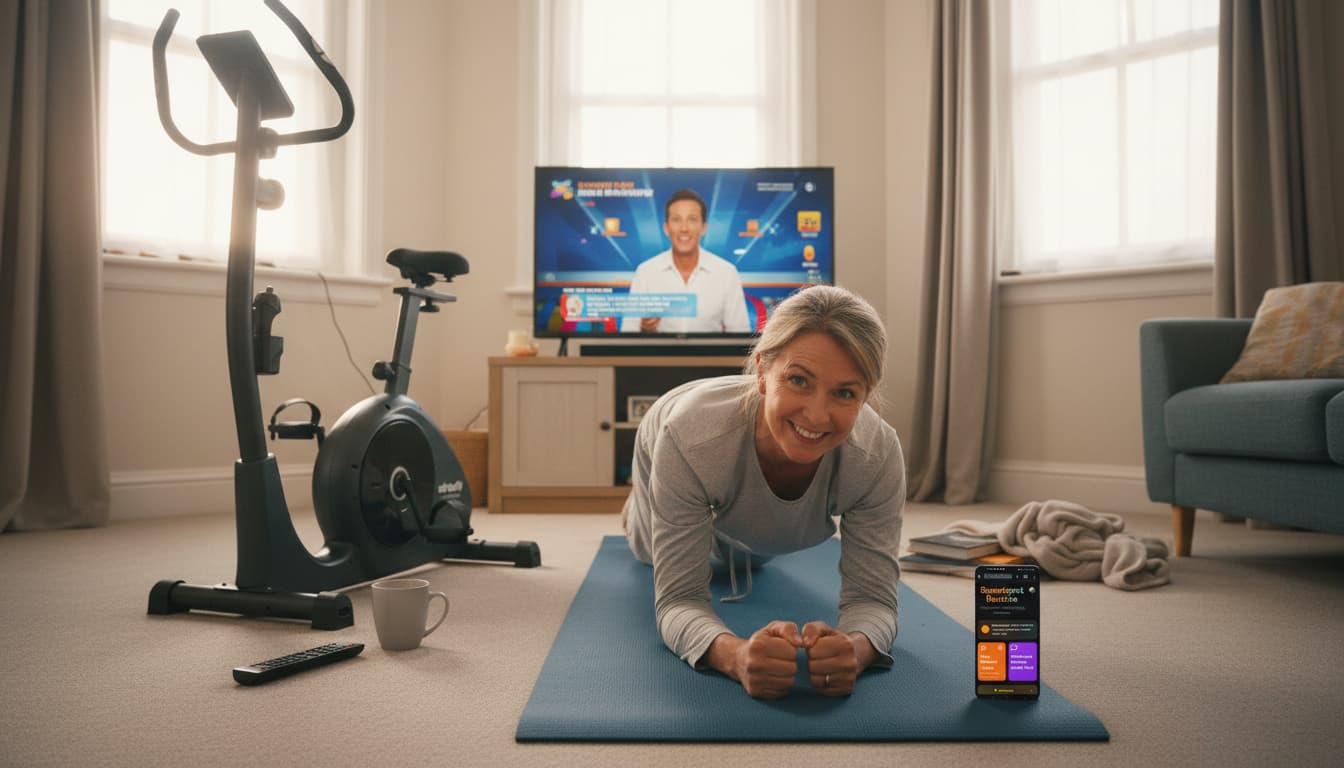
Fitness for the Truly Lazy: Why Bodyweight Exercises Are Your Secret Weapon
Let’s be honest. The thought of driving to a gym, waiting for a machine, sweating next to strangers, and then driving back is… exhausting. Just typing it made me want a nap. If your ideal workout is rolling out of bed and getting it over with, welcome. You’re not unmotivated; you’re efficient. And bodyweight exercises are the most efficient fitness hack for the gloriously lazy.
For years, we’ve been sold the idea that meaningful exercise requires a gym membership, expensive equipment, and at least an hour of your day. But what if the opposite were true? What if the most effective workout for building a sustainable habit is the one that requires almost nothing from you except the willingness to move in place? This is where bodyweight training shines—it meets you exactly where you are, which for many of us, is right at home, possibly still in pajamas.
The “No-Prep, No-Go” Workout
The biggest hurdle to any exercise routine isn’t the workout itself—it’s everything that comes before it. The process of deciding to exercise, finding appropriate clothes, packing a bag, traveling to a location, and setting up equipment creates a massive mental barrier. For someone who values efficiency (or simply dislikes unnecessary effort), that barrier often feels insurmountable.
Bodyweight exercises obliterate this hurdle entirely. No digging for gym clothes? Fine, do it in your pajamas. No drive? Your living room carpet is your new gym floor. No intimidating equipment? Your body is the machine. The barrier to entry is so low that you can literally stumble into a workout. Feeling lazy? Perfect. You’re already qualified. By removing every possible excuse before it has a chance to form, bodyweight training makes starting feel effortless—and starting is often the hardest part.
The 5-Minute “I Can’t Be Bothered” Rule
Committing to an hour of exercise is a deal-breaker for many people. An hour feels like a significant portion of your day, something that requires planning, preparation, and mental energy you may not have to spare. But five minutes? Even the laziest among us can muster that.
The beauty of bodyweight fitness is that a shockingly effective workout can be squeezed into the time of one boring work call or the duration of a single TV commercial break. Ten push-ups here, a 30-second plank there, a few squats while the kettle boils. It all counts. You’re not training for the Olympics; you’re just moving. And for someone who prefers minimal effort, consistency in tiny doses beats heroic, once-a-month efforts every single time. A five-minute daily habit delivers far more benefit than a single punishing hour you never actually do.
Maximum Results, Minimal Movement
One of the greatest misconceptions about exercise is that effectiveness scales with complexity or duration. In reality, bodyweight exercises use compound movements—a fancy term for “works multiple lazy spots at once.” A squat strengthens your legs, core, and back simultaneously. A push-up works your chest, shoulders, arms, and core in one fluid motion. A lunge engages your legs, glutes, and stabilizing muscles.
You’re getting more bang for your lethargic buck. Instead of spending time on isolation exercises that target single muscles, you can accomplish a full-body stimulus with just a few foundational movements. Focus on a handful of key moves, do them decently, and you’re done. Efficiency is the name of the game. Why spend 45 minutes on a complex routine when 10 minutes of smart, compound movements delivers comparable benefits?
The “No-Thinking-Required” System
Complex workout plans are a motivation killer. When you need to consult an app, remember which exercise comes next, or figure out proper form for a complicated movement, you’re spending mental energy that could otherwise go toward just moving. For someone who values simplicity, this mental load is a deal-breaker.
Bodyweight routines can be brain-dead simple. Remember three things: Push (like a push-up against the wall or floor), Pull (like a bodyweight row under a sturdy table), and Squat (sitting down and standing up). Do a few of each. That’s it. No overthinking, no planning, no confusion. The less mental energy required, the more likely you are to actually do it. When exercise becomes automatic, it stops feeling like a chore and starts feeling like just something you do.
Your Couch Is Your Gym
One of the most underrated barriers to exercise is location. Having to go somewhere—anywhere—adds friction. The beauty of bodyweight training is that your workout environment is wherever you happen to be. The couch armrest can be used for incline push-ups. The floor in front of the TV is perfect for planks (and yes, you can still watch your show). A sturdy chair is ideal for triceps dips and step-ups.
You don’t have to go anywhere. You can literally go from slumped to sweating without changing your zip code. For the efficiency-minded individual, this is the ultimate advantage. There’s no travel time, no waiting for equipment, no awkward interactions. Your gym is always open, always available, and never crowded.
The Sneaky Health Perks You Get Without Trying
Here’s the best part: even lazy-portion workouts deliver real, measurable health benefits. You’re not aiming for a bodybuilder physique; you’re aiming to feel less creaky, more energetic, and more capable in your daily life with minimal invested effort.
Better sleep: Regular movement helps regulate your sleep cycle, meaning you spend less time tossing and turning and more time actually resting.
Less back pain: Many bodyweight exercises strengthen the core and posterior chain, addressing the postural issues that come from sitting and slouching.
A mood boost: Those sneaky endorphins released during exercise improve mood and reduce stress without requiring you to become a fitness enthusiast.
Improved metabolism: Consistent movement supports metabolic health, helping your body process energy more efficiently.
All of these benefits come from small, consistent efforts—not from heroic workouts. That’s a win by any standard.
The Lazy Person’s Starter Protocol
If you’ve read this far, that’s effort. Let’s cash it in. Here’s a two-minute routine that requires nothing but your body and a wall:
Done. You moved. You countered laziness. You can now resume your repose with a clear conscience. That took less time than scrolling through social media, and you’ll feel better for it.
The Bottom Line for the Blissfully Idle
Bodyweight fitness isn’t about pushing limits; it’s about gently expanding them from the comfort of your own home. It respects your inherent desire to do less while still giving you more—more health, more strength, more energy. It’s the anti-gym, pro-nap workout philosophy.
You don’t need to become someone you’re not to benefit from exercise. You don’t need to love sweating, wake up at 5 a.m., or own expensive gear. You just need to move, a little, with whatever you have. Your body is enough. Your living room is enough. Five minutes is enough.
So embrace your inner lazy person. They’re not holding you back; they’re your smartest fitness advisor. They’ve just found the easiest possible path to getting it done. Now, go do those two minutes. Then you can get back to doing absolutely nothing. You’ve earned it.
Frequently Asked Questions
Do bodyweight exercises actually build strength, or do I need weights to see results?
Yes, bodyweight exercises can build significant strength, especially for beginners or those returning to exercise. As you progress, you can increase difficulty by adjusting leverage (elevating feet for push-ups), slowing down movement, increasing repetitions, or reducing rest time. For most health and fitness goals, bodyweight training is more than sufficient.How often should I do bodyweight exercises to see benefits?
Consistency matters more than duration. Aim for short sessions—5 to 15 minutes—most days of the week. Even three to four times per week produces meaningful improvements in strength, mobility, and metabolic health. The key is frequency, not marathon sessions.Can bodyweight exercises help with blood sugar management?
Absolutely. Any consistent movement improves insulin sensitivity and helps lower blood sugar levels. Bodyweight circuits that raise your heart rate and engage large muscle groups are particularly effective because active muscles take up glucose without requiring as much insulin. The predictability of home-based workouts also makes blood sugar management easier to plan for.What if I have joint issues or physical limitations?
Bodyweight exercises are highly adaptable. Push-ups can be done against a wall or counter. Squats can be shallower or done with chair support. Planks can be held on knees. The beauty of bodyweight training is that you control the intensity. Start where you’re comfortable and progress only when ready.Is a 5-minute workout really worth doing?
Yes. Five minutes of movement is infinitely better than zero minutes. Short workouts help build the habit of exercise, which is often harder than the exercise itself. Once the habit is established, you may naturally want to do more. But even if you never do more than five minutes, regular short sessions deliver real benefits for mood, mobility, and metabolic health.📘 Looking for a complete plan to train at home? Read our Home Workouts Without Equipment — A Beginner's Guide for everything you need to get started.
Written by Wayne
Founder of Sweetspot Routine. Passionate about helping people with type 2 diabetes take control of their health through sustainable fitness.


